How Australian cleaning contractors should price a square-metre job
A square-metre rate is only a summary of hours, Award labour, travel and risk. Build the hours first or the rate will lie to you.
Editorial desk · 26 February 2025 · Updated 1 February 2026
The most expensive number in a tender is the one copied from last year's spreadsheet. A facilities manager asks for a rate per square metre. A pricing schedule has a cell waiting for it. The contractor who fills that cell from memory, or from a competitor's leaked bid, has not priced a job. They have published a guess and agreed to be held to it.
A square-metre rate is a summary. It is hours of labour at Award cost, plus on-costs, travel, consumables, plant, overhead and profit, divided by an area. If any of those inputs is wrong, the rate is a lie you told yourself. This piece is about building the inputs so the summary can survive a Tuesday night in a Melbourne tower or a Friday run between three regional schools.
It is not a quote, and it is not legal or industrial advice. Check the current Cleaning Services Award 2020 (MA000022) on the Fair Work Ombudsman site, your state's workers compensation class, and the specification in front of you.
The metre you are actually cleaning
Clients measure buildings the way valuers and leasing agents measure them. Contractors clean what can be reached with a mop, a vacuum and a machine that fits through the door.
Net lettable area, gross floor area and "the number on the fire-stair plaque" are not cleanable area. Plant rooms, risers, locked tenancies, furniture footprints, compactus runs and the back of a reception desk all change the work. A 2,000 square metre floor plate with open workstations is not the same job as 2,000 square metres of cellular offices, a dirty kitchenette and a boardroom that must be done before 7am.
Walk the site with a laser or a calibrated wheel and a notepad. Mark exclusions the specification already carves out — external glass, high dusting above a stated height, periodic strip-and-seal, carpet extraction, consumables supply — and mark the work the specification forgot to mention but will still complain about. How to read that document is a skill of its own; see reading a cleaning specification before you fill a pricing schedule. If you cannot walk it, you can only offer a range, with the assumptions written on the face of the quote. A lump-sum bid on a PDF floor plan is how contractors buy a loss they will spend twelve months trying to roster away.
Frequency is part of the area. Five nights a week on a CBD tenancy is a different product from three nights on a suburban office and a fortnightly detail. The square metre has not changed. The hours have.
Productivity is not a constant
Industry tables of "square metres per hour" exist. Some contractors treat them as law. They are starting points for an empty, lightly soiled floor of a stated type, done with a stated method. They are not a time-and-motion study of this building on this roster.
A clear vinyl corridor after hours, run with a walk-behind scrubber-dryer, is a different hour-rate to a cluttered classroom, a carpeted partnership floor with chairs that cannot be stacked, or a hospital corridor that must stay dry enough to walk. Soil load matters. So does the specification: a "full clean" that includes detail of kitchens, amenities and touch points is not a dust-mop and a bins run dressed up as a comprehensive service.
Build your own times from jobs you already run. Time a competent cleaner on a known floor type, with the machine you actually own, and write down what got skipped when the hours were short. That record is worth more than a photocopied productivity sheet from another country. If you must use a published table to bid a new sector, treat it as a hypothesis and put a contingency against the first ninety days of timesheets.
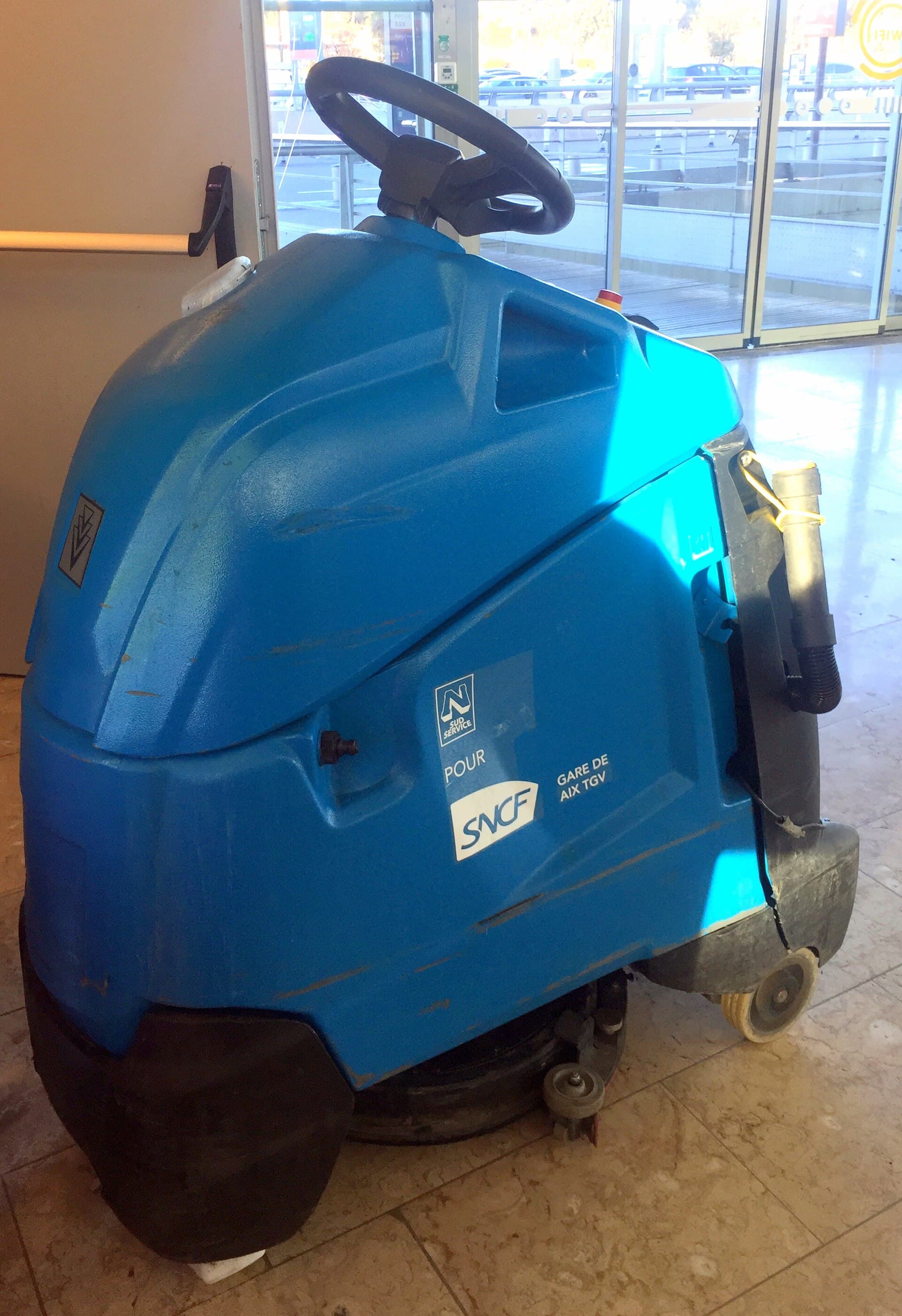
Machines change the maths — a scrubber-dryer earns its keep on open hard floor and sits in the van on a furniture-dense tenancy. Choosing floor machines is a capital decision that has to match the metres you just measured. Do not price the machine rate and the labour rate as if both apply to every metre. And do not assume an autonomous scrubber deletes the Award hour. Someone still has to set it up, manage the water, do the edges, and stay on site if the building's insurer or the night concierge requires a person.
Award labour is the spine of the rate
Most contract cleaners sit under the Cleaning Services Award 2020. In-house hotel or retail cleaners may sit under a different award; check coverage before you copy a rate from a hospitality tender into a contract-cleaning bid. The Award is not a vibe. It is classifications, ordinary hours, penalty rates, overtime, allowances and rostering rules.
A Level 1 employee is not interchangeable with a Level 2 or Level 3 just because they all hold a mop. If the work includes leading a small team, specialised equipment, or duties the classification definitions put higher, price the classification you will actually roster. Under-classifying to win a tender is how you meet the Fair Work Ombudsman later.
Employment type changes the loaded hour before you touch penalties. A part-time employee under this Award is paid a 15 per cent allowance on the minimum hourly rate, which exists so the employer can roster ordinary hours in a defined pattern without overtime for those ordinary hours. A casual is paid a 25 per cent loading instead of the permanent entitlements casuals do not receive. Casuals are not a discount labour pool for regular, predictable night work. If the hours are regular, the Award's own casual clause is narrow: intermittent or irregular work, uncertain hours, or replacing someone who is rostered off or absent. Price the engagement you can defend.
Then apply the clock. Evening, night, Saturday, Sunday and public holiday work attract penalty rates set out in the Award. A "day rate" built on weekday ordinary hours will not survive a 9pm start in a tower, a Saturday periodic, or a 26 January school clean. Broken shifts — two periods of duty on the same day with more than an hour between them, inside a 13-hour spread — attract a broken-shift allowance. Travel between workplaces is paid at the applicable rate as if the employee were working, and the employer pays the fares. Vehicle allowance applies when the employee uses their own car by agreement.
Do not paste last year's dollar figures into this year's bid. Minimum rates and most allowances move with the Annual Wage Review, usually from the first full pay period on or after 1 July. Open the current pay guide. If you have an enterprise agreement, price that instrument, not the Award you wish you still had.
On-costs that sit on top of the hourly rate
The Award hourly rate is not your labour cost. Superannuation guarantee is 12 per cent of ordinary time earnings from 1 July 2025. Workers compensation premiums are set by state and territory schemes and by your claims history; cleaning is not a low-risk classification, and a single serious injury will follow the next year's rate. Annual leave, personal/carer's leave and public holidays are real hours you pay for work that is not done on site. The Award's annual leave loading is 17.5 per cent of the minimum hourly rate, or the relevant shift and weekend penalties if those are greater — another reason a "flat" labour percentage copied from a construction spreadsheet is the wrong tool.
Payroll tax arrives once you cross your state's threshold. The threshold and the rate are not national. A two-van operator who has never thought about it will meet it on the way to a regional book. Long service leave is a state matter; portable schemes in some industries do not automatically solve a cleaning contractor's accrual, so take advice rather than inventing a provision.
Add the costs that never appear on a timesheet and still follow every hour: induction, site-specific training, PPE, uniforms, first-aid, WHS consultation time, and the supervisor hour that is not billable to a single site. If you ignore them, they come out of the profit line you have not got.
Travel, parking, security and the van
A CBD job that looks dense on a map can still burn an hour before a mop hits the floor. Loading-zone rules, basement height limits, after-hours dock bookings, and a security contractor who will not issue a fob until someone from the building is present are all labour. If the cleaner is being paid to wait, you are paying. Price the wait or write it out of the scope in a way the client has initialled.
Parking is not a rounding error in Sydney and Melbourne cores. Either the building provides a bay, or you are buying a night rate, or the crew is coming in on public transport with machines that do not fit on a train. Regional work swaps parking for kilometres. Diesel, vehicle finance, insurance and the empty return trip after a 6am school finish belong in the job cost, not in a vague "motor vehicle" overhead.
Consumables — bin liners, soap, toilet paper, hand towels, seat sanitiser — are either in the rate or they are a separate schedule. Mixing the two is how you discover, in month four, that you are funding a building's amenities from a cleaning margin. Chemicals and microfibre have a cost per clean, not per month. Dose, do not guess.
Plant has a life. A walk-behind scrubber-dryer, a carpet extractor and a box of backpack vacuums wear out on the jobs that paid for them. Depreciation, service, and the hire of a replacement when yours is in pieces are job costs. If the specification implies a machine you do not own, the capital sits in this bid or you are subsidising the client with a machine bought for someone else.
Profit is not what is left if you forget a line
A contractor who "just wants to win the work" and hopes to make it up on extras is not pricing. They are lending the client money and labour. Put a profit line in before you divide by metres. Put a contingency against specification creep — the extra kitchen, the Saturday event, the "can you just" that never becomes a variation.
Management time is not free because you are the owner. The hour you spend on a complaint, a missed swipe, or a workers compensation form is an hour you are not selling. If the contract needs a working supervisor, that is a labour line, not a hope.
Cash-flow cost belongs near the profit line. A job billed monthly on 30-day terms, paid on day 45, while wages clear every week, has a financing cost even if you never speak to a bank. That problem is the subject of cash flow, retentions and 30-day terms. Do not pretend a profitable rate on paper is cash in the account.
CBD and regional are different products
A Collins Street or George Street tenancy concentrates area, security theatre and after-hours access. You can sometimes run a crew across several floors or several buildings in one night, which is the only reason CBD rates ever look "cheap" per metre. The moment the buildings are in different security regimes, or the last lift is locked at 10pm, that density disappears.
Regional work is travel, thin rosters and the absence of a spare cleaner when someone is sick. A 400-kilometre week between a hospital, a council office and a school is not a productivity problem. It is a geography problem. Accommodation for a periodic crew, fatigue management, and the Award travel rules between workplaces all sit on the rate. So does the reality that a lost contract in a regional town can idle a van you cannot redeploy tomorrow.
Labour markets differ. A loaded Award hour in a capital-city night market is not the same recruiting problem as a coastal town in January when hospitality is paying cash at the weekend. Price the roster you can fill, not the roster you wish existed.
Sector changes the metre as well. A hospital corridor is not an office floor; a food plant sanitation shift is not a foyer mop. If the work sits in hospital and aged care, schools, hotels, strata common areas or food processing, price the specification those sectors actually enforce, not a commercial-office productivity number wearing a different high-vis vest.
Build the hours, then publish a rate
A defensible method looks like this.
First, establish cleanable area and the specification, floor by floor, including periodic work and the exclusions you will not do. Second, apply a time you can defend — from your own jobs, a timed trial, or a conservative table plus contingency — at the frequency in the contract. That gives labour hours per week or per month. Third, roster those hours against Award classifications, employment types and the actual clock, then load super, workers compensation, leave and the other on-costs. Fourth, add travel, parking or accommodation, consumables, plant, site supervision and a share of overhead. Fifth, add profit and a cash-flow buffer. Sixth, then divide by square metres if the tender insists on a rate.
Show your working internally. You will need it when the client asks why your rate is not the number they saw on a group-buying panel, and when a supervisor says the hours do not fit. If you cannot explain the rate without pointing at a competitor, you do not have a rate.
A raw dollars-per-metre figure lies because it hides frequency, soil, access, Award mix and the distance from the depot. Two buildings of the same area can be a living wage apart. The contractors who stay in business treat the metre as a reporting unit, not as a method. The method is hours. If the resulting number will not staff the building, walk away before you lodge. How the rate then appears in a scored response sits in winning commercial cleaning tenders.
When the book grows past what one owner can hold in their head, the same discipline is what lets you hire a supervisor and open a second depot — the problem taken up in growing from two vans to a regional operation. If you are buying someone else's metres instead of winning them, read buying or selling a cleaning contract book before you treat their rate as evidence of value.
More on this desk sits in the pricing and growth hub.
Questions contractors ask
- Is there a standard Australian commercial cleaning rate per square metre?
- No. A published rate is someone else's hours, Award mix and risk, summarised. Build yours from cleanable area, frequency, a time you can defend from a site walk, and the current Cleaning Services Award.
- Should I use casuals to keep the quoted hourly rate down?
- Casual loading is 25 per cent on the Award minimum. It is not a discount. If the hours are regular and predictable, the Award expects part-time or full-time engagement, and the part-time allowance is there for a reason.
- How do I price a site I cannot walk?
- You do not, except as a range with assumptions written on the face of the quote. Floor plans hide soil, furniture, access and the real cleanable area. A lump-sum bid on a PDF is how contractors buy a loss.