Reading a cleaning specification the way a facility manager wrote it
A cleaning specification is a facility manager’s attempt to buy a defensible result, usually written in the language of the last contract. Learn to separate frequencies from outcomes, soil from area, and the work you will be paid for from the work you will be blamed for.
Editorial desk · 4 March 2025 · Updated 18 March 2026
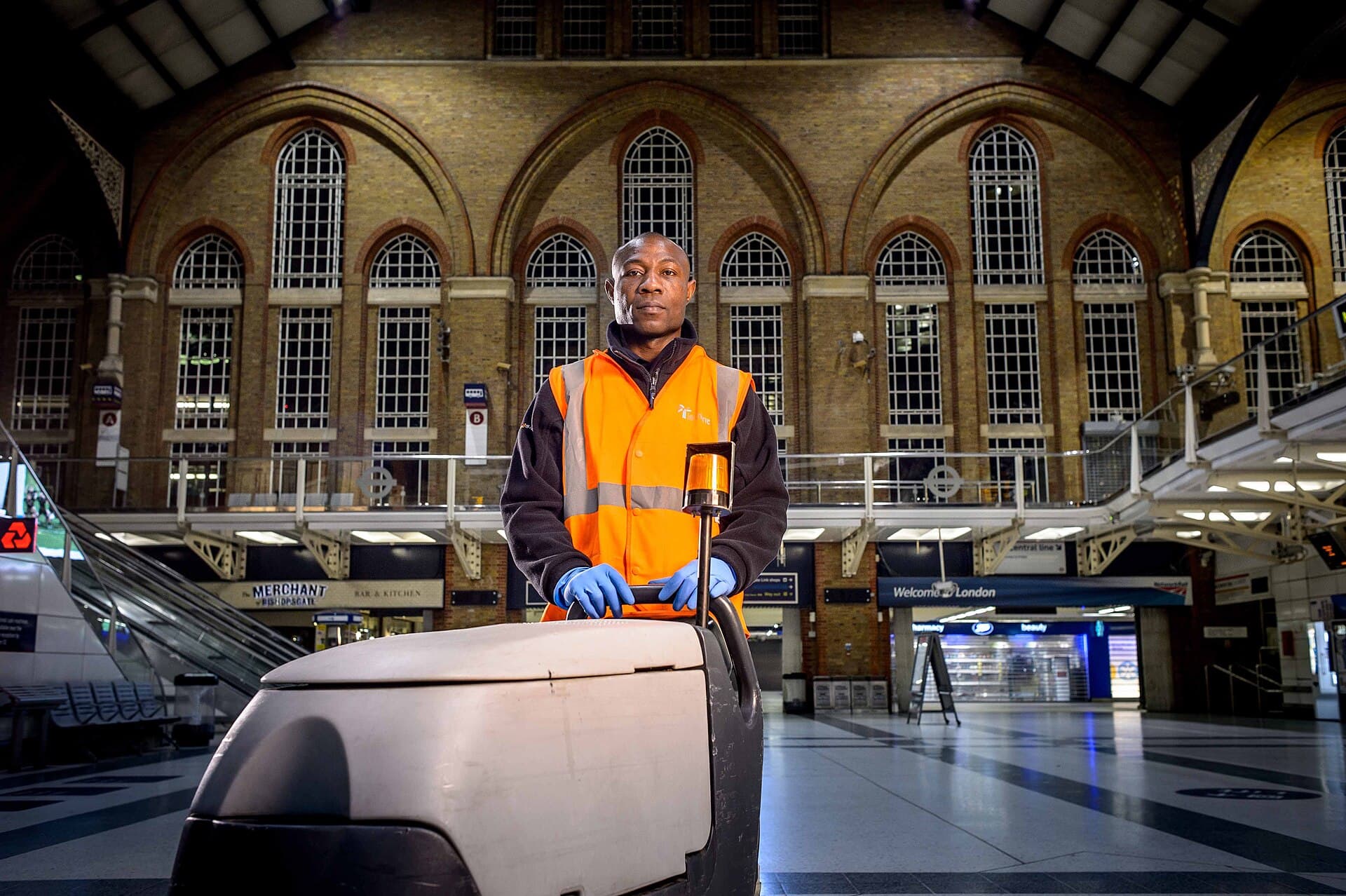
A cleaning specification is not a description of dirt. It is a facility manager’s attempt to buy a result they can defend to a building owner, written in the language of the last contract they inherited, plus whatever a consultant added after the last complaint about the lifts. If you price the headings and skip the footnotes, you are not reading it the way they wrote it.
The useful skill is not highlighting every daily task. It is seeing which sentences are a frequency, which are an outcome, which are a hope, and which are a transfer of risk. That reading belongs with the rest of contracts and tendering. It is also the difference between a bid you can staff and a building that eats Saturday overtime for the life of the term.
How these documents get written
Very few specifications are drafted from a clean sheet on the floor of the building. They are assembled. A previous contractor’s scope is copied. A consultant’s template is dropped in. A room-data schedule from the last refurbishment is appended and not updated when a tenancy turns into a laboratory, a dark kitchen or a childcare drop-off. The facility manager is often trying to fix last year’s argument — stained grout in the ground-floor amenities, a sticky loading dock, a director who walked through at 8am — without increasing the budget line.
That history is visible if you look. Repeated tasks in one area and silence in another usually mark a complaint, not a risk assessment. A sudden “green cleaning” chapter with no chemical-approval process is often a policy from head office. A page of infection-control language left over from a pandemic addendum may or may not still be funded. None of this makes the buyer dishonest. It makes the document a palimpsest. Your job is to read the layers.
If you need a reminder of how this journal treats claims about Australian rules, the editorial standards are the same ones you should apply to a spec: name the jurisdiction, do not import another country’s codes, and do not invent a square-metre rate to paper over a hole in the scope. A public-sector pack has the same holes plus a scored response; the discipline in building a government tender response starts with this reading.
Frequencies are not a roster
A frequency specification looks comforting. Toilets daily. Kitchenettes daily. Offices vacuumed three times a week. Glass weekly. High dusting quarterly. You can drop those lines into a spreadsheet and produce a number that looks like work. The trap is that a frequency is a visit, not a result, and the visit assumes a soil load the author has not measured.
Daily toilets in a 40-person suburban office are not daily toilets in a concourse, a school between periods, or a clinic. Three vacuums a week in a low-occupancy professional suite are not three vacuums a week in an open floor that still runs a full headcount and a café. If the spec gives frequencies and also promises “presentation at all times” or “hotel standard”, you are holding two contracts. Price the one the facility manager will enforce on a wet Thursday, not the one that appears in the contents page.
When you build a tender response, the method should show that you understood this. A roster that hits every frequency with the same two-hour visit is a roster that will miss the amenities at 2pm. Write the day in order: what happens at opening, what happens after the lunch rush, what is left for the night crew, and which frequencies are actually periodics pretending to be daily work.
Outcomes without a standard are a blank cheque
Outcome or performance specifications are fashionable because they sound modern and they shift argument onto the contractor. “Floors will be free of dust, scuffs and staining.” “Amenities will be hygienic and stocked.” “Glass will be smear-free.” None of those sentences tells you what inspection method will be used, from how far, in what light, or after how many occupants have walked through since the last clean.
A usable outcome spec names a standard the two parties can stand in a room and apply. That might be a joint inspection checklist, a periodic audit with a defined scoring sheet, or a photographic baseline agreed at commencement. It should also name what is not cleaning: worn finish, damaged grout, failed sealant, leaking dispensers, stained ceiling tiles, and the black heel marks that come back twenty minutes after a polish because the floor is tired. If the spec is silent on fabric versus soil, the argument will arrive in month two.
Read the outcome against the service level agreement. The spec says what good looks like. The SLA says how fast you must restore it and what you pay if you do not. A generous-sounding outcome with a two-hour rectification window and a service credit is not generous.
Soil load is the missing column
Square metres without soil are a real-estate brochure. The things that change labour in Australian buildings are not mysterious: weather tracked in from a wet street, sand and dust in coastal or inland towns, pollen, a food offer, a public-facing concourse, after-hours events, construction on occupied floors, and a tenancy mix that turns over. A specification that lists 8,000 square metres of “good quality commercial” and a food court in a footnote has not described the job.
Walk the soil, not the marketing suite. Look at entrance matting — whether it exists, whether it is long enough, whether anyone cleans it. Look at the path from the car park or the station. Look at the waste rooms and the loading dock. Look at whether the hard floor is a finish you can maintain with an auto-scrubber or a stone that will be destroyed by the wrong pad. Look at carpet age. Old carpet that the owner will not replace will be called a cleaning failure for the life of the contract.
Soil also includes people. A building that is “light occupancy” on a floor plan may be running hot-desking at full density, or a government counter that queues in the wet. Ask for current occupancy, not design occupancy. If the buyer will not give it, write an assumption and a variation trigger when headcount or public use changes.
After-hours access is labour
Cleaning time is not the same as building time. After-hours access in an Australian commercial tower usually means security sign-in, a loading-dock window, a service lift that the night fill already booked, and alarm zones that do not match the floors you have to clean. In a school it may mean you cannot start until the last community-use group leaves the hall. In a hospital or clinic it may mean you work around patients and cannot park a machine where the spec’s minutes assume you can.
The specification should say when you may enter each area, who lets you in, and what happens on public holidays, shutdowns and event days. If it says “after hours” and the pricing schedule assumes a straight night shift, check the Award penalties for those hours before you call the rate competitive. The square-metre price is a labour price. Access delays are unpaid minutes unless you have written them in.
Keys, swipes and codes are a WHS and a theft problem as well as an access problem. Who issues them, who audits them, and what you are liable for if a fob goes missing should be in the spec or the contract, not in a hallway conversation with a guard.
Consumables are a scope, not a courtesy
Toilet paper, hand towels, soap, sanitiser, sanitary bins, nappy bins, bin liners, urinal screens, batteries for dispensers — someone buys these. If the specification is silent, you will buy them under protest after the first empty dispenser, or you will be accused of theft of the client’s stock. Neither is a business model.
Get the specification to say:
- who selects the product (the buyer often has a dispenser contract you cannot break)
- who orders and who holds the inventory
- where it is stored, and whether that store is in the building
- what happens when a tenancy runs a special event and empties the amenities on a Tuesday
- whether sanitary and nappy services are a specialist subcontract the buyer already holds
Consumable theft by occupants is not a cleaning failure. If the spec makes you responsible for “always stocked” with no delivery lead time and no lockable store, you are funding the building’s paper. Price it or exclude it.
Periodic work hiding in the daily page
The expensive tasks are often listed as if they were a wipe. Carpet extraction, hard-floor strip and seal, high-level dusting, exterior glass, high interior glass, pressure washing of entries, kitchen exhaust, waste-compactor cleans, and periodic disinfection of high-touch points after an outbreak — these are not a few extra minutes on a Thursday. They need machines, isolation, dry time, and sometimes a second trade.
A competent specification separates daily, weekly and periodic work, and gives frequencies that match the floor type. Many do not. “Hard floors maintained to a high gloss” on a worn vinyl in a public corridor is a periodic program plus a capital conversation with the owner. “Carpets kept free of stains” in a food-adjacent lift lobby is extraction plus matting plus a ban on the thing that is staining it.
If periodics are in the lump sum, show them as a program in your method: which month, which areas, what downtime the buyer must give you. If they are extra-to-contract, say so in the assumptions and keep a rate card. The argument you want in month eight is “this is the agreed extraction”, not “we thought the daily rate included a strip and seal”.
Hidden exclusions, and the work you will be blamed for anyway
Read the exclusions as carefully as the inclusions. Then read the service obligations that quietly write the exclusions back in. Common gaps in Australian commercial packs:
- exterior windows, canopies and high glass
- car parks, loading docks and hardstand
- graffiti and chewing gum
- clinical or cytotoxic waste, sharps, and anything that belongs with a licensed waste contractor
- construction residual and builder’s clean after a tenancy fitout
- after-function cleans, overflow from a Christmas party or a council event
- plant rooms, roofs, confined spaces, and anything that needs a height ticket the daily crew does not hold
- occupant kitchens that are actually food businesses
- childcare or clinic rooms with a different infection-control standard to the rest of the floor
A good specification puts those items in or out. A bad one leaves them out of the pricing schedule and in the complaint log. Your written assumptions should repeat the exclusions in plain English. If the buyer will not accept the assumption, you have learned something in time to walk away.
Also watch for work that is not cleaning. Replacing damaged tiles, resetting a failed lock, chasing a leak, and moving furniture that a tenancy left in the corridor are facilities tasks. If you pick them up to be helpful, they will become your job, unpaid. The variation clause exists for this. Use it while the paint is still wet, not after the invoice has been disputed.
Room data, metres and the building that is not on the page
The schedule of areas is where quiet errors live. Tenancies added since the last measure. A mezzanine that exists on the fire plan and not on the cleaning plan. Amenities counted as one room when they are three. A car-park level included in the total square metres and excluded in the scope narrative. Do not take the total on the cover as gospel. Reconcile it on the inspection, even if you only sample.
Units are Australian: square metres, not an imported square-foot rate with a conversion someone rounded twice. If a consultant has left US room names in a document — “restrooms”, “janitor’s closet” — treat that as a warning that the template was not written for this building. The work is still toilets, cleaners’ rooms, and a service riser that may not have a tap.
Ask for base-building versus tenancy responsibility. In a multi-tenant commercial tower the cleaner may be contracted for common areas only, or for common areas plus some tenancies on a different frequency. In a government precinct you may be cleaning three agencies with three security regimes under one lump sum. If the spec blurs that, your roster will blur it, and one agency will telephone you about another agency’s cups.
Write the specification back to them
The most useful page in a tender response is often not the glossy method. It is a short schedule that restates, in your words, what you think you are being asked to do: daily, periodic, consumables, access hours, exclusions, and the variation triggers for occupancy, events and construction. If the evaluation panel disagrees with your restatement, you want that disagreement before you start, not after you have hired.
That restatement is also how you protect the people on the tools. A specification that cannot be explained to a leading hand at 5am is not a specification. It is a brochure. Read it until you can hand a supervisor a building, a cupboard, and a list that matches the hours you priced. If you cannot, the document is not finished — and neither is your bid.
Questions contractors ask
- What does “as required” mean in a cleaning specification?
- It usually means the buyer does not want to pay for a scheduled visit, and they will still expect the result. Treat every “as required” line as a priced assumption or a written exclusion. If they will not define a trigger, you are being asked to donate labour.
- Are frequencies or outcomes more dangerous to price?
- Both can be. A frequency spec that ignores soil load understaffs the building. An outcome spec with no inspection standard and no exclusions will punish you for weather, visitors and a leaking plant room. Read them together, then price the harder of the two.
- Who should supply toilet paper, soap and bin liners?
- The specification should say. If it is silent, ask in the briefing and write the answer into your assumptions. Consumables are not a rounding error once you are buying paper for a food court or a school.