Choosing floor machines for Australian commercial sites
Walk-behind or ride-on, battery or cable, vinyl in a school or terrazzo in a civic hall — the machine has to match the floor, the climate and the nearest technician, not the brochure.
Editorial desk · 19 March 2025 · Updated 20 January 2026
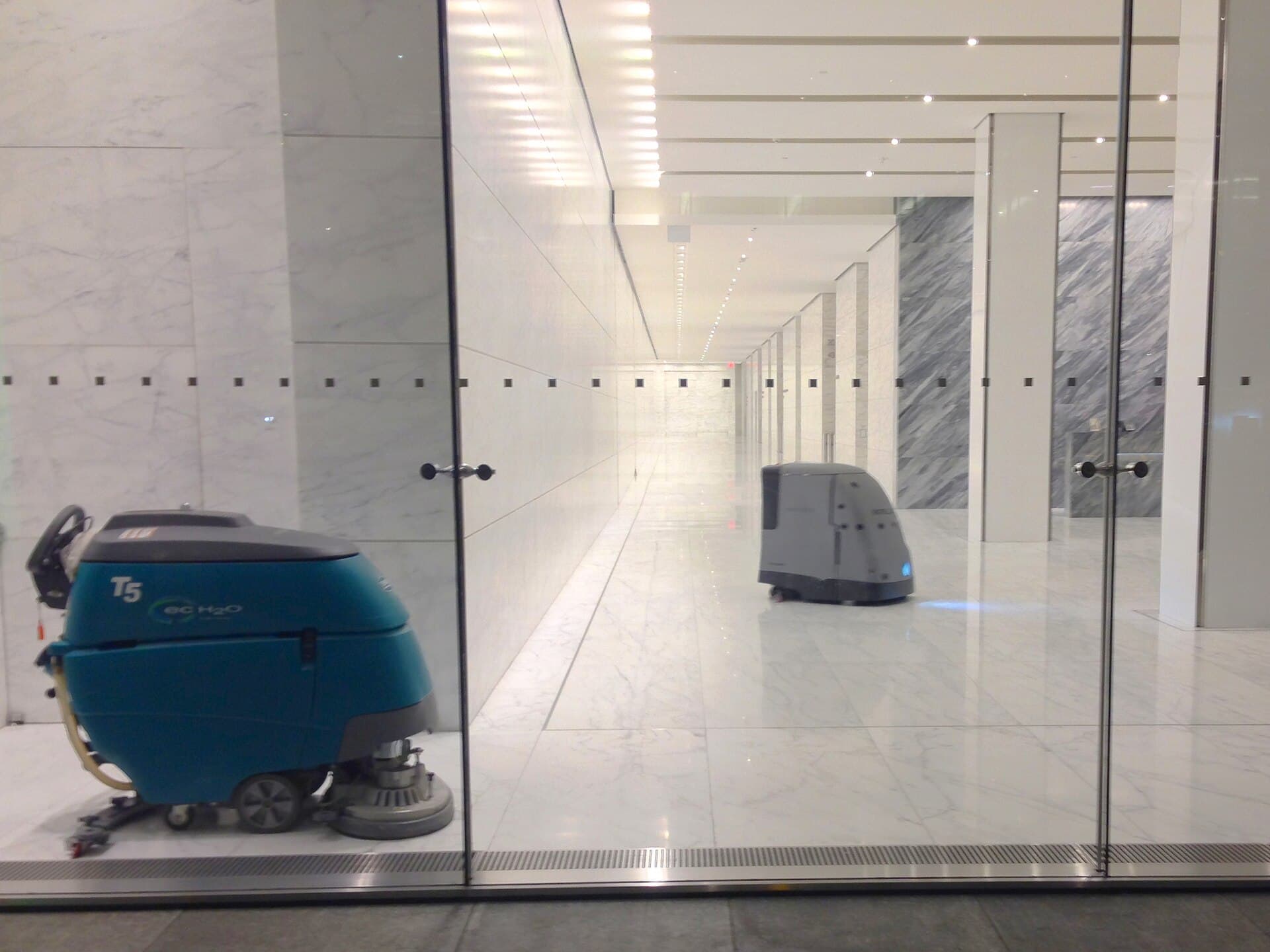
A floor machine is not a personality. It is a way of moving water, detergent and mechanical action across a surface that someone else owns, in a building that will still be there at 6am when the first teacher or shopper walks in. Australian commercial stock is unforgiving on that point. The same contractor can hold a primary school on sheet vinyl, a council civic centre on terrazzo, a suburban supermarket on ceramic, and a strata foyer on polished concrete. Buying one “hero” scrubber and forcing every site onto it is how you polish a floor into a slip hazard or leave soil in the grout for the next tender inspection.
This piece sits in the chemicals and equipment hub because the machine, the pad and the chemistry are one system. Get the machine wrong and the chemical looks like the problem. Get the chemical wrong and a perfectly good battery walk-behind becomes an expensive way to smear fat.
Start with the floor, not the catalogue
Hard-floor machines and carpet machines are not cousins you can dress the same way. A cylindrical or disk scrubber-dryer is built to wet a surface, agitate, and recover the slurry. A carpet extractor is built to inject solution into pile and pull it back through a vacuum path. Using a hard-floor auto-scrubber on carpet, even on a “soft” setting, drives soil down the fibre and leaves a damp track that smells by Tuesday. Using a box extractor as a daily tool on vinyl is just slow mopping with extra parts to break.
On hard floors the first cut is soil type and porosity. Vinyl composite tile and sheet vinyl in education and health want controlled moisture and a pad that cleans without burning the wear layer. Terrazzo and marble in civic buildings and older banks want chemistry that does not etch the cementitious or resin matrix, and they often want a diamond or fine-grit path rather than a green pad and a heavy alkaline. Unsealed concrete in a loading dock wants something that will not turn dust into black paste. Ceramic in food courts wants grout recovery, which a wide squeegee on a ride-on will miss if the operator is chasing square metres.
Carpet is its own argument. Many Australian offices still run broadloom in meeting rooms and tiles in open plan. Daily work is vacuuming with a machine that actually has brush agitation, not a cheap sucker that only looks busy. Interim work is encapsulation or a light extraction on traffic lanes. Restorative extraction is a scheduled event, not a panic after a flood of coffee. If the specification says “carpet cleaning quarterly”, ask whether that means a wand on every workstation or a bonnet wipe of the boardroom. The machine you buy should match the answer you wrote into the tender, not the answer you wish you had written.
Walk-behind versus ride-on
Walk-behind scrubber-dryers earn their keep on interrupted floors: classrooms with bag racks, medical suites with chairs, retail with endcaps, toilets off a corridor. The operator can lift the squeegee, turn inside a doorway, and clean the last metre to the skirting. Productivity is honest — one person, one machine, the floor they can actually see.
Ride-on machines earn their keep on open, repeatable floors: shopping-centre concourses, airport landside, warehouse aisles, hospital corridors that run straight for eighty metres. The productivity claim only holds if the site is truly open. A ride-on in a cluttered office is a very expensive way to wait for someone to move a pot plant.
There is a middle band that trips contractors. A large high school hall looks like a ride-on job on the plan. On the night, the stage lip, the stacked chairs and the sports-line markings mean the operator is off and on the machine more than they are driving. A compact ride-on can still win there if the same person then takes it down the main spine of the school. A full-size machine that cannot fit the cleaners’ store is a paperweight.
Weight and floor loading matter more than sales people admit. Older timber stages, some raised access floors, and a few heritage civic interiors will not thank you for a tonne of battery and steel. Ask the facility manager for the floor rating before you demo. If they do not know, do not guess on their terrazzo.
Training is not optional. A walk-behind still needs an operator who understands pad pressure, squeegee angle and when to dump dirty water rather than recirculate it until the floor streaks. A ride-on needs that plus spatial judgement in a public concourse. The WHS file should show who was trained on that model, not “the team has used scrubbers before”.
Battery versus cable
Cable machines are lighter, cheaper to buy, and they do not die at 2am because someone forgot to dock the charger. They also invent a new trip line every time the operator turns a corner. In an empty warehouse on a Sunday that may be acceptable. In a hospital corridor, a school with holiday programs, or a centre that still has security walking the floor, a trailing lead is a foreseeable hazard. You manage it with a spotter, cable covers, or you stop pretending and buy battery.
Battery machines have their own ledger. Lithium packs have changed the game for runtime and opportunity charging; older lead-acid fleets still exist and still get ruined by operators who leave them half-charged in a hot cleaners’ room. Runtime on the brochure is a clean floor, new pads and a full tank. Runtime on a sticky food-court after a Friday night is shorter. Budget a spare pack or a second machine if the site cannot be left half-done.
Chargers need a dedicated, RCD-protected point that does not share a daisy chain with a floor polisher and a kettle. Regional sites in particular run out of spare circuits in the cleaner’s cupboard. If you have to run an extension to the charger, you have already designed a fault.
Noise sits next to power. A cable burnisher at 70-plus decibels is a problem in a hotel atrium at 5am and in any site that still has night staff. Battery walk-behinds are usually quieter. That is not a wellness slogan; it is how you keep the after-hours access arrangement when the security guard is tired of the scream of a pad.
Heat is an Australian problem that European brochures skip. A van in Dubbo or Townsville in January will cook a battery left on the steel floor. So will a tin-roof store with no ventilation. Store packs as the manufacturer says, which usually means off the vehicle, out of direct sun, and not next to the chemical cage.
Vinyl in schools
Education vinyl is the most common hard floor in the Australian book, and the most often abused. Many education departments and Catholic systems still specify a polished appearance in halls and a matt, safer appearance in classrooms and wet areas. Those are different pad-and-chemical programs. A high-speed burnisher and a zinc or acrylic finish will give you the hall photograph. The same program in a classroom with bag-drag and drink-bottle rings will powder and mark within a term.
No-wax or polish-free vinyl has spread through new school builds. It is not “no maintenance”. It is a different maintenance: auto-scrub with a red or white pad, a neutral or mildly alkaline cleaner, and the discipline not to dress it with leftover finish because a principal wants shine for open day. Once you put a coating on a polish-free sheet, you own the stripping cycle.
Water volume matters. Vinyl adhesives and edges fail when an operator floods the floor and leaves the squeegee dry. Walk-behinds with honest recovery are kinder than a mop bucket that is changed once a wing. In older demountable classrooms, check for lifting welds before you put a machine on them.
Holiday strip-and-seal is still in a lot of school specifications. It is labour-heavy, chemical-heavy, and a heights and chemical problem if someone decides to climb for high dusting in the same shutdown. Price the machine for the daily program, and treat the holiday restoration as a separate crew and a separate chemical set. Do not buy a 500-litre ride-on because you strip two halls in January.
Terrazzo and civic buildings
Civic terrazzo — town halls, court foyers, war memorial interiors, older university entries — is a different trade. The aggregate will take a diamond grind and a fine polish. The binder will not take a cheap alkaline “degreaser” night after night. You etch it, then you spend the next year trying to bring the colour back.
A walk-behind with a pad driver and the right diamond or resin pads is usually the civic tool. Ride-ons can work on large, modern terrazzo concourses (some airports, some university campuses) if the joints are sound. On a heritage floor with brass strips, the ride-on is a risk to the metal and to the edges.
pH discipline is the whole game. Neutral daily clean. Acid only as a controlled restoration, never as a “brighten-up” in the night bag. If the specification allows crystallisation or powder polish, that is a trained operator and a machine you do not also use for kitchen degrease. Cross-contamination of pads between a food dock and a civic foyer is how you write a complaint letter for the mayor.
Dust control during any restoration matters under the same WHS duties that cover silica and general dust. Terrazzo grinding is not a DIY Saturday. If the contract includes periodic restoration, say so in the SWMS and do not run it while the building is open.
Humidity, salt and the climate you actually work in
Coastal humidity in Queensland, the Top End and northern NSW keeps floors wetter longer. A squeegee that “looks dry” in Canberra in July can leave a film in Cairns in February. That film is a slip and a soil magnet. You compensate with recovery — a well-adjusted squeegee, a working vac motor, and the humility to go back over a lane rather than claim the square metres.
Air-conditioned interiors create their own condensation at entries. Shopping-centre doors in a summer storm dump grit and water onto the first ten metres of stone or vinyl. That is where the walk-behind lives, not the ride-on that wants a clear run to the far court. Matting is the cheapest machine you will ever specify; fight for it in the scope before you buy steel.
Salt air eats metal and cheap fasteners. Coastal depots should prefer machines with decent corrosion protection and a rinse discipline after each shift. A machine stored wet in a sea-breeze car park will tell you about it within a year.
Battery chemistry also feels the cold, even in Australia. A high-country site in July, an early-morning loading dock in Canberra, a coolroom precinct — packs deliver less. Do not size the fleet on a Brisbane demo day.
Service networks outside the capital cities
This is the clause that should sit above the colour of the tank. A walk-behind from a brand with a technician in your regional city is worth more than a shinier imported unit whose nearest parts bin is in an industrial estate on the other side of the state. Ask, in writing:
- Where is the authorised service agent, and do they hold common wear parts — squeegee blades, pad drivers, vac motors, brushes?
- What is a typical turnaround for a drive or a control board?
- Will they service on your site, or must the machine travel?
- Is the charger and battery pack a stocked item or a special order?
Loan machines are how a city contractor hides downtime. Regional contractors often cannot. Build downtime into the roster: a second, older walk-behind as a spare, or a documented mop-and-wet-vac fallback that still meets the specification for a week. If you cannot describe that fallback, you are not ready for a single-machine site four hours from the depot.
Consumables are part of the service question. Pads, diamonds and squeegee rubber are not generic even when they look it. A slightly wrong blade width leaves trails. Keep a site kit on the wall, not “in the van when someone remembers”.
Demo on the real floor, then write the number down
A supplier demo on a clean showroom vinyl is entertainment. A useful demo is your worst site, at the dirty end of the week, with the operator who will actually run the machine. Time a defined area. Weigh the water you put down and the soil you bring back. Look at the edges. Ask the night supervisor whether they would still use it when they are two people short.
Then price the whole year: capital or lease, pads, detergent at the dilution you will really use, power or battery replacement, service labour, and the hours you save — or do not save — on the roster. If the machine does not drop labour or lift the inspection score enough to hold the contract, it is a toy. That is the same scepticism we apply to autonomous scrubbers. Automation is a later decision. Fit-for-purpose is the first one.
The chemical program has to be written next to the machine, not after it arrives. Neutral cleaner for vinyl daily. A different product for food-court degrease. Nothing that fights the pad. Training records and the SDS folder travel together; see chemical safety and SDS. Microfibre and mop systems still do the edges and the toilets — the machine does not retire colour-coding.
Buy for the floor you have, the climate you work in, and the technician who will answer the phone. Everything else is paint.
Questions contractors ask
- Should a school contract default to a ride-on scrubber?
- Only if the corridors and halls are wide enough, the vinyl specification allows machine traffic, and the night roster has a trained operator. Many primary schools still run faster on one walk-behind and a well-set mop system than on a machine that spends half the shift turning around furniture.
- Is a battery machine always the safer choice after hours?
- Battery removes the trip hazard of a trailing lead and is usually quieter, but it is not automatically safer. You still need a charged spare, a charger on a RCD-protected circuit, and a plan for what happens when the pack dies on the far side of a shopping centre.
- How much should regional service availability change the brand decision?
- Enough that it can outweigh a cheaper capital price. A machine that sits for three weeks waiting for a board or a pad driver from the capital is not an asset. Ask for the nearest authorised technician, typical parts lead time, and whether they will travel to your depot.